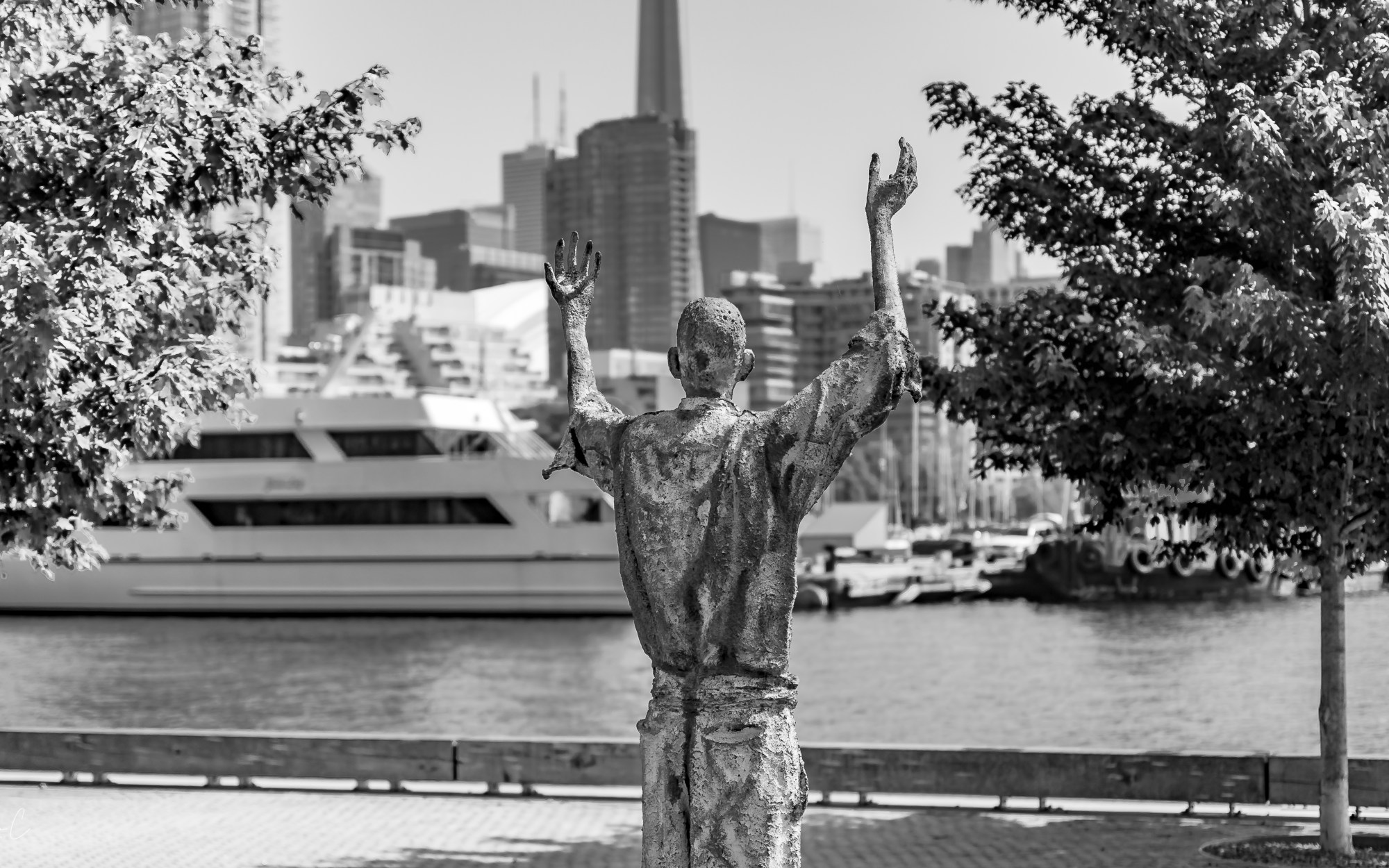

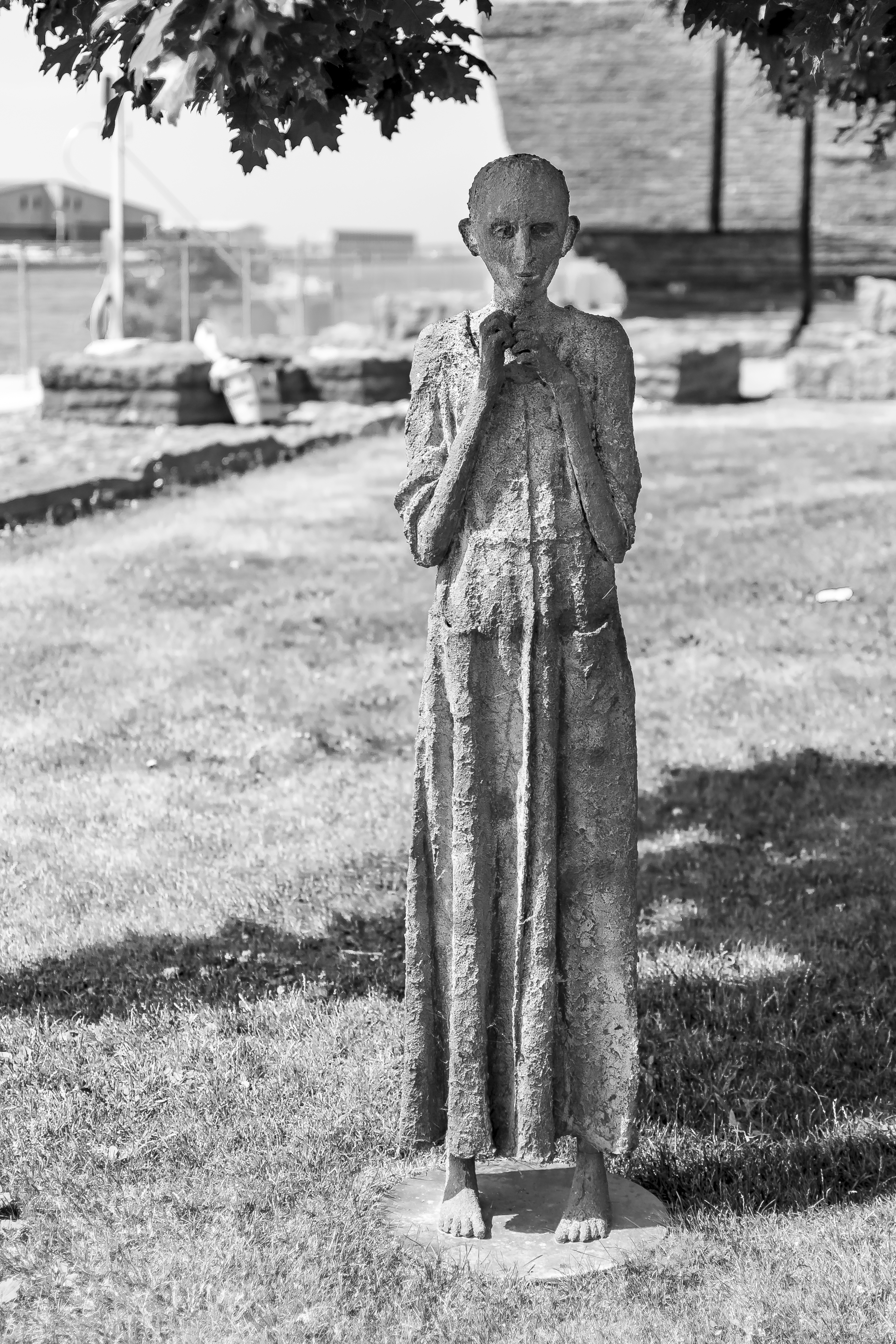
Ireland Park is located at Eireann Quay, just behind the Canada Malting Silos, on Toronto’s Waterfront. The park was designed by Toronto Architect Jonathan Kearns and features 5 bronze statues sculpted by Irish artist Rowan Gillespie, a large monument made from limestone imported from Kilkenny, and a cylindrical glass tower.


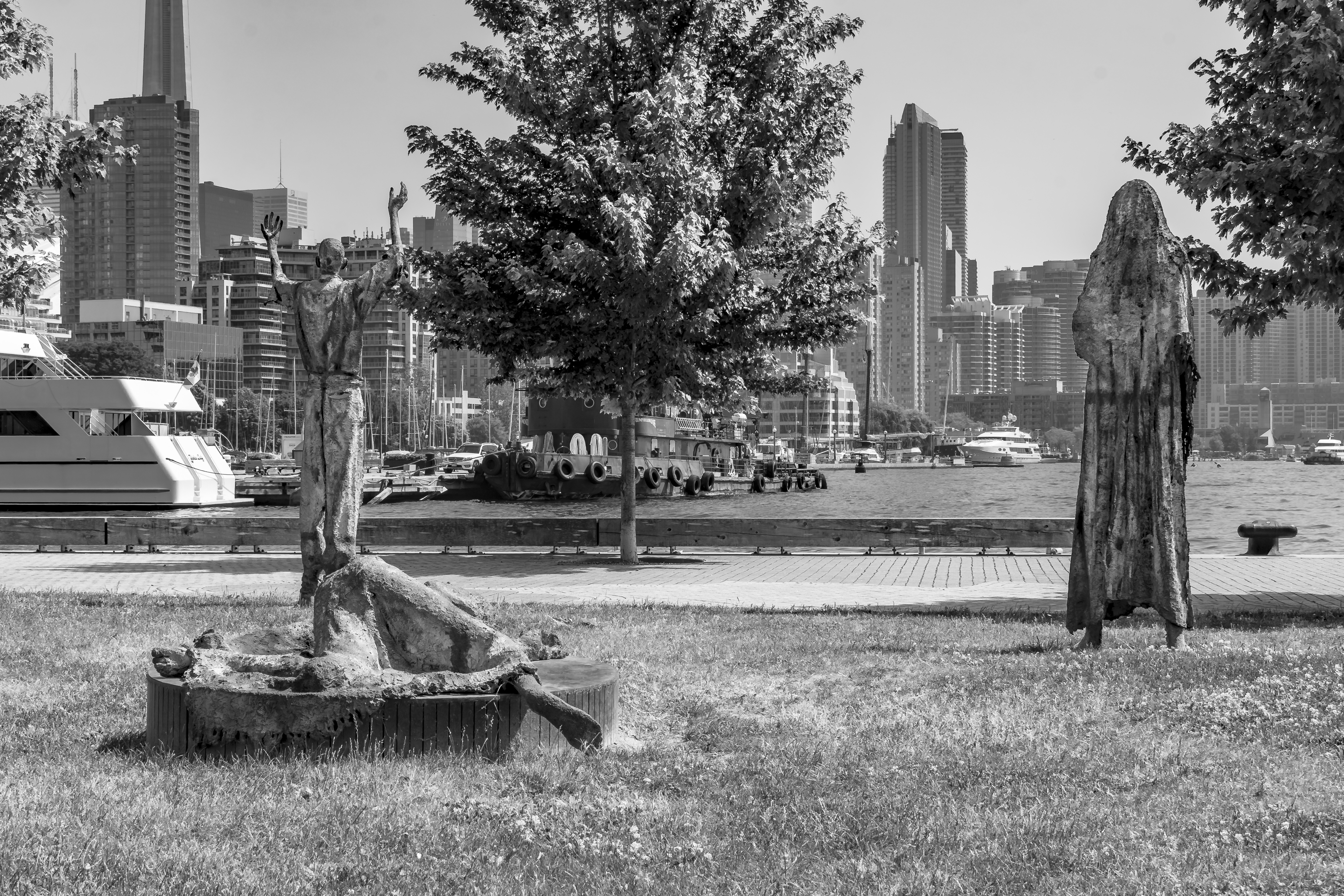 The park commemorates the the large number Irish immigrants who fled Ireland during the Great Potato Famine and landed in Toronto in 1847. It officially opened on June 21, 2007 and was attended by many dignitaries including the President of Ireland at the time as well as the Premier of Ontario and Mayor of Toronto.
In 1847, Toronto had a small population of approximately 20,000 people. However, the residents, government and church officials in the city did all they could to welcome the close to 40,000 newcomers to the city. Many new immigrants did not survive the difficult journey from Ireland to Canada, and many more died after reaching Toronto in the Typhus epidemic of 1847. It is estimated that more than 1000 people died before being able to call Canada their new home.
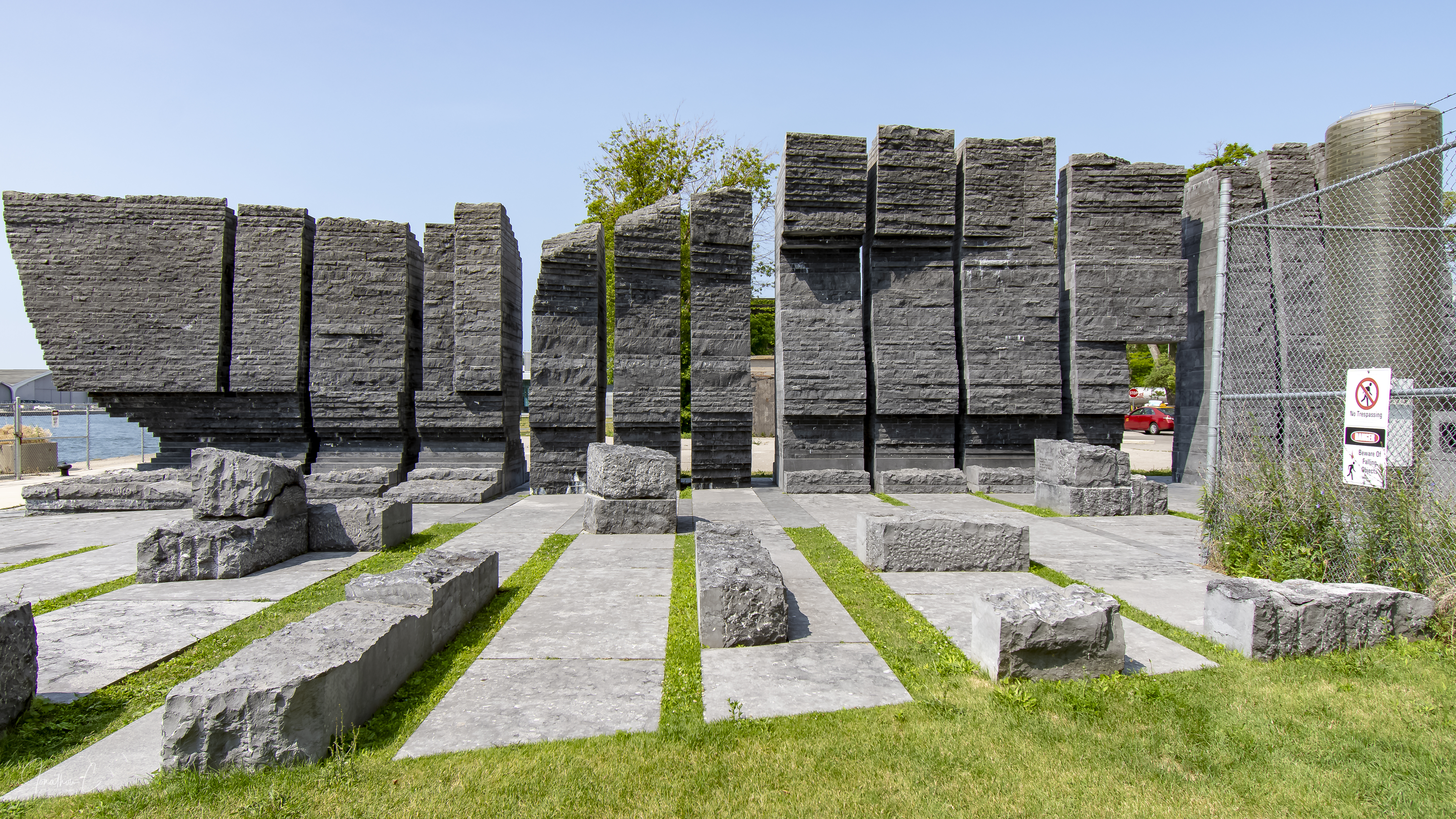
The limestone wall at the west end of the park bears the names of those who lost their lives as well as the names of many Toronto citizens who gave their lives helping the newcomers. It stand beside the glass tower, which is meant to represent a beacon of hope.


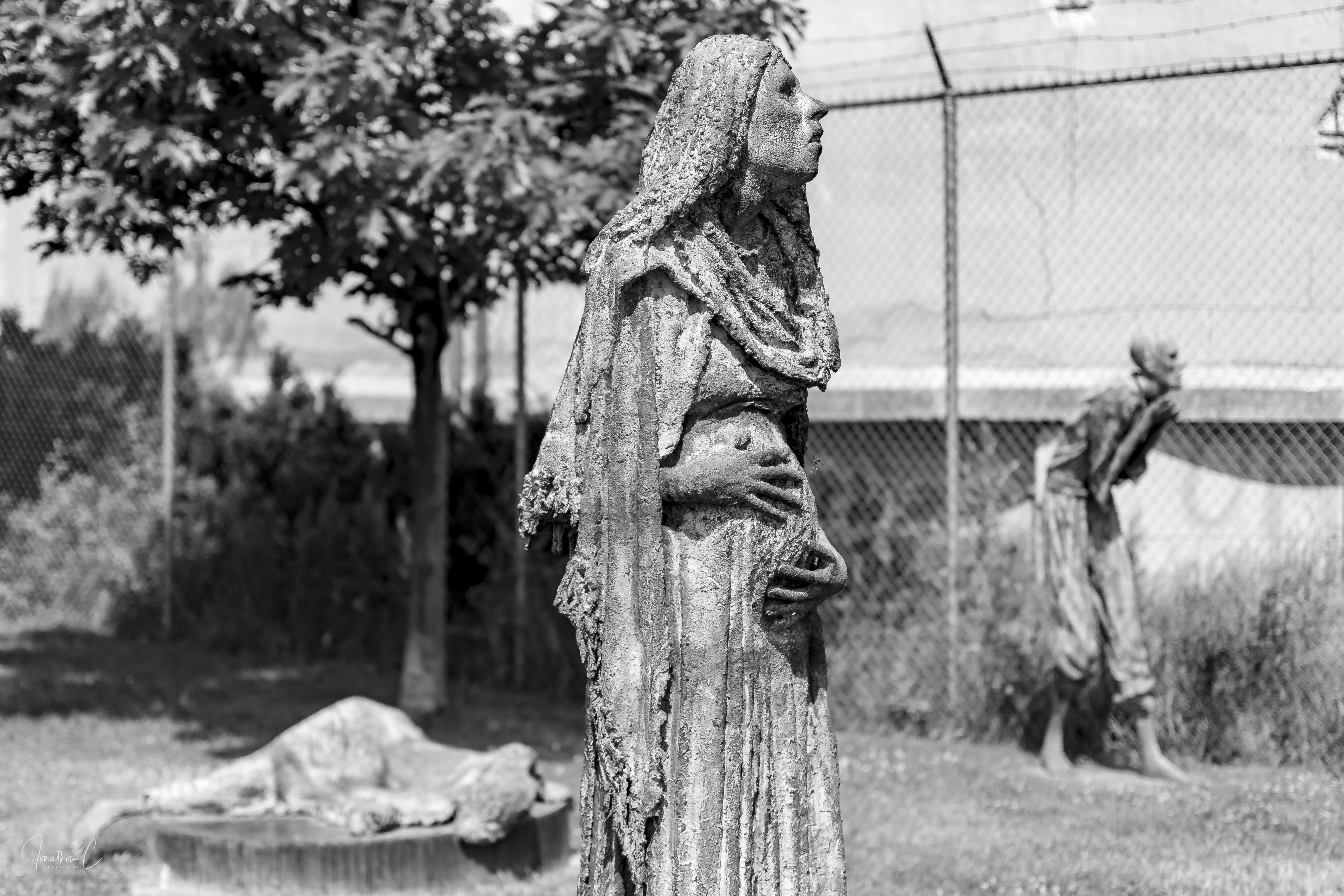
The bronze statues are representations of two women, two men and one child. One of the women is pregnant, and the other laying on the ground near death – representing both the new hope and peril of the long voyage. The men are both staring in awe at what is in front of them, one with outstretched arms, and the other with hands clasped. Finally, at the rear of the installation is a child with large eyes looking ahead, perhaps in fear or anticipation.
Ireland Park has a mirror installation in Dublin, which shows people leaving Ireland; it is called The Departure, while the installation in Toronto is called The Arrival. As well, the placement of sculptures by the silos is not accidental as they are meant to symbolize an abundance of food for the newcomers, which stand in direct contrast to the dire situation they were trying to escape in Ireland.

 Jonathon C Photography